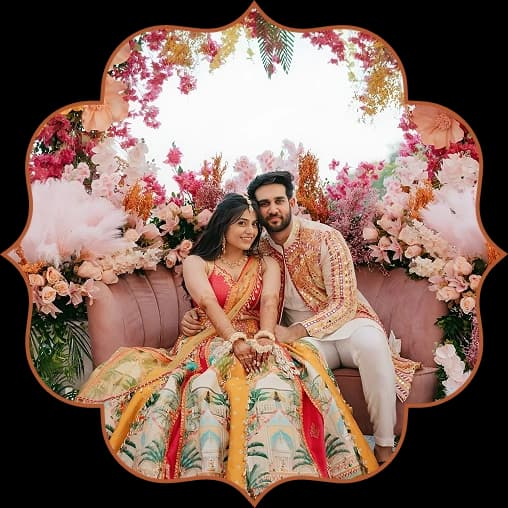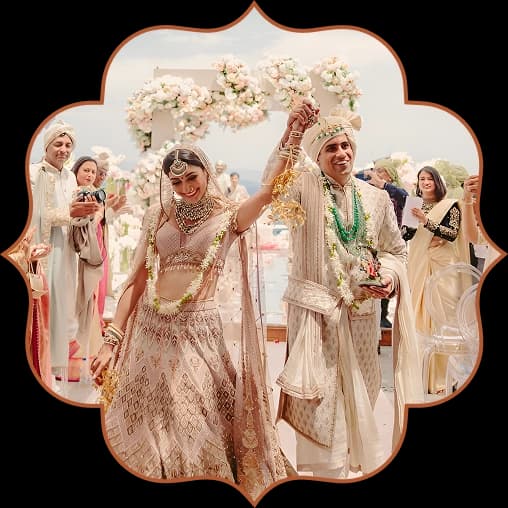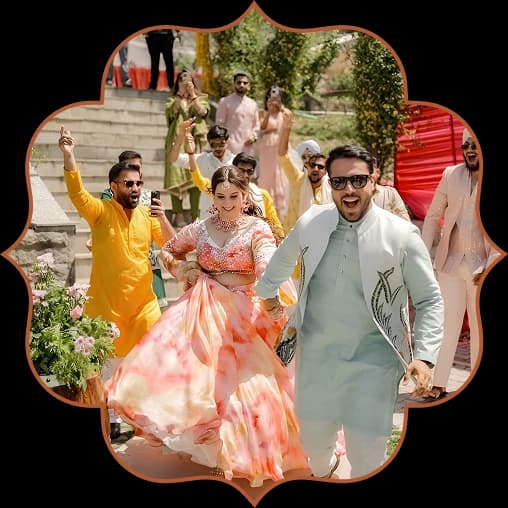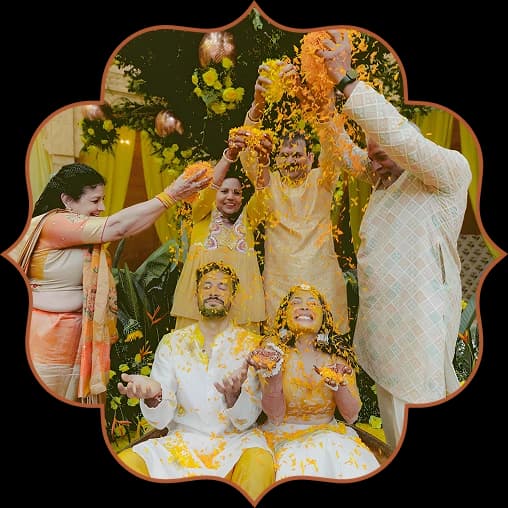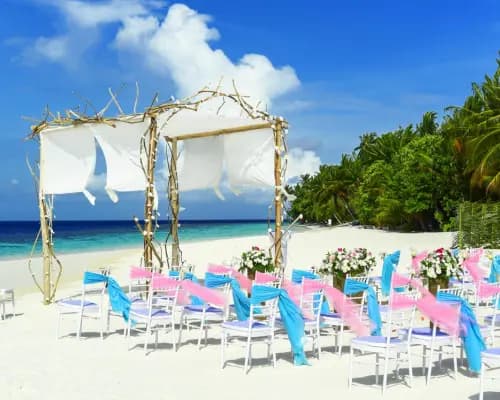
An Indian wedding is rarely one event. It’s a run of them, and by the time the couple reaches the mandap, the families have often been celebrating for days. From the Roka that starts the story to the reception that closes it, each function has its own mood and its own cast of relatives.
Get together with both sets of parents before a single venue is booked, and find out what both of them expect the child to be doing. During this discussion one of those roles will invariably crop up that you haven't planned for, but will undeniably matter to someone's grandma.
Imagine a living room with two families on sofa ends, passing around a plate of mithai. This is Roka Ceremony in its most popular iteration. Groom a gets a tikka and a lil gyaan, mum and dad say yes above the noise and it's a done deal. A few houses bring halls into the circle of trust.
Since it's such a low-key affair, many couples forgo it or leave it as an 'add-on' to your engagement. Before you agree to all the festivities, it's a good idea to find out which ones your families are keen to have.
The rings are exchanged at the engagement, often with friends in tow, not just family, and a photographer and a proper dinner. The engagement ceremony is the moment for the family, and this one is in the couple's favour.
Those who are both will often do them both in the same afternoon, which saves a second trip for distant relatives.
Ask anyone who's ever been to an Indian wedding's Haldi ceremony and the first thing they'll mention are the stains. Aunts and cousins slather their fingers (or a bunch of mango leaves) with turmeric paste and rub it all over the bride and groom, and in less than ten minutes the courtyard, the guests and at least one unsuspecting hapless bystander are yellow.
What it's called, who does it and when it takes place vary from community to community. In Punjabi families they talk about the vatna. In Bengal it's Gaye Holud, where the turmeric arrives from the groom's family on a tray with sweets and a whole fish-a sight you won't forget if you've never seen it carried in that way before. Most families do it the day before the wedding or the morning of. Wear something you don't mind tossing.
A sprawling bridal design can easily take five or six hours. The Mehndi ceremony then becomes an afternoon of snacks, folk songs and so much waiting - everyone gets their own henna on the bride's long, waiting arms and hands. Within the design is the name of the groom, and the groom spends a portion of the wedding night trying to find it.
The longer the paste remains on the deeper the colour, so brides will endure dry, cracking paste on their skin for hours rather than remove it early. It's traditionally applied one or two days before the wedding. Arriving the afternoon before the destination wedding is perfect, as everyone is already there and it's quiet, and others have even done it on the same day as their Haldi or Sangeet.
Once, the Indian wedding Sangeet was a night of family women singing folk songs to the beat of the dholak. That's mostly died out. Now, there's a stage, a sound system and a set list that the cousins have been practicing since the engagement and the groom's friends have probably cooked up as a surprise.
Twelve numbers is standard, and seldom does an evening end when the printed invitation says it will. At a destination wedding it's usually the first night both sides of the family are under one roof, so it's arguably more significant than the usual dance bash. When space is limited, couples often combine it with Mehndi and limit the numbers to a few.
So, the priest selects a muhurat – an auspicious hour for the main ceremonies – and everybody else aligns their night around it. That's why a couple will walk their pheras at 4.40 in the morning, with hundreds of tired family members in attendance.
Most common: First exchange garlands (Jaimala / Varmala) and proceed to Kanyadaan. Pheras or Saptapadi around Agni or sacred fire. Sindoor and Mangalsutra. Also, in Tamil Brahmin weddings, there's Kasi Yatra and the Oonjal swing. Subho Drishti (Subho means "good" and Drishti means "glance") which is the first look of bride and groom with Betel leaves placed in between them, this is a Bengali wedding tradition. Your family priest will be aware of the others.
The Kanyadaan hold significance in some families and not in others, and there is an entire section on the symbolism of Kanyadaan if you want that level of detail. Our guide to Indian wedding rituals explains these rituals one by one.
And it goes on for maybe ten minutes and half the room is crying. Her bride throws rice over her shoulder as she walks out of the groom's house, as is customary at a lot of North Indian weddings, a way of thanking her parents for all they did for her, and gets into a car and leaves.
Many spend it or skip it altogether – especially when the pair already reside in the same city.
The ceremonies are over, the priest has returned to his parish, and the room is a lot noisier. Those guests who did not attend the previous ceremonies often see the bride and groom for the first time as the married couple at the reception. Anticipate a grand entry with music, an extensive buffet and a lot of speeches nobody anticipated would go on quite so long.
The same evening is fine, and so is a different week in a different town. Many couples host a second reception at their hometown after a destination wedding so the friends and even extended family who can't make the trip get their fill, and if you're throwing two parties in two places, they each need a guest list and a budget.
Most of the time your priest spends on the ritual itself, which lasts two to four hours, but that can vary based on your community, how complete the priest is about explaining everything, so it's better to ask him for a more specific estimate. Ceremony itself usually takes a couple of days.
Most of the time, yes. Roka and engagement are always a great match. If your guest list is small, then Haldi and Mehndi can be combined. Most often Mehndi and Sangeet are celebrated simultaneously; and, if the wedding venue allows, your wedding and reception can be combined and held back-to-back. Combining functions is based on your guest list and budget; it's not necessarily due to tradition. So, when weighing the functions in an Indian wedding, start with the ones that you (and your family) would never want to give up.
Indian weddings are elaborate affairs that can last up to three days with elaborate ceremonies, high energy, family & guests. While you have got varied options to choose from in terms of ceremonies, it all comes down to the traditions, budget & guests invited.
|
Wedding Duration |
Suggested Ceremony Order |
|
One-Day Wedding |
Haldi ceremony in the morning, followed by the wedding ceremony and reception in the evening. |
|
Two-Day Wedding |
Day 1: Mehndi and Sangeet. Day 2: Haldi ceremony, wedding ceremony and reception. |
|
Three-Day Wedding |
Day 1: Roka ceremony or welcome dinner. Day 2: Mehndi, Haldi and Sangeet. Day 3: Wedding ceremony and reception. |
|
Destination Wedding Weekend |
Arrival Day: Welcome event for guests. Wedding Day: Ceremony and reception. Following Day: Post-wedding activities and farewell brunch. |
Choose the functions that are required, and the families that anticipate.
Consult the priest about the muhurat and the time required for the rituals.
Choose which events to combine.
Schedule the sequence and place bookings for the venues.
Plan how guests move between venues.
Leave buffer time between functions.
Prepare for a destination wedding-maybe a little note of arrivals, hotels, transport and rain backup.
Not every function on this list has to be at a traditional Indian wedding. Pick the ones that count for your family, share the order with your elders, and book your priest for the muhurat in plenty of time. If you're getting hitched away from home, that. Every event requires a time slot prior to mailing the invites. But to make your wedding unforgettable, you need to hire the best destination wedding planners in India. And this is where Destination Wedding Bharat comes in. We help couples organize traditional and modern wedding ceremonies across scenic and royal locations in India. So what are you waiting for? Check out our website and plan your dream wedding today!
Roka or engagement, Haldi, Mehndi, Sangeet, the actual wedding, Vidaai and the reception. Different families choose different combinations and which of these depends on the region and community.
There isn't one. This one in the book is the most common order, but the final say goes to your community and the elders, and many, many people change it up to have it fit their calendar, place, and guest list, and no one minds.
Yes, and this is common among many families, especially to save money and time. One afternoon is great for one, especially if loved ones are coming in from other cities.
If it's an intimate guest list and there's enough gap between the two events to change outfits, yes. They can be split up where Haldi happens in the morning followed by Mehndi and Sangeet in the evening.
So, a marriage is the main event where the marriage ceremony is actually performed by the priest, usually in the presence of close relatives and friends of the groom and bride. And a reception is where the celebration occurs with a large guest list, table dinner and celebrations including music.
Select your functions, get your rituals signed-off by your priest, and ensure venues are booked around the muhurat. Then factor in guest travel, stay and a weather backup.