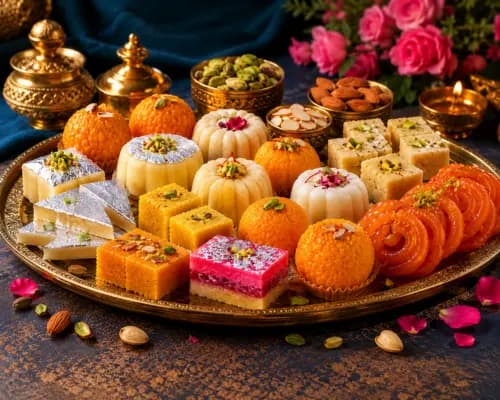
At 11 pm, as the music winds down and people begin to depart, almost all Indian weddings look pretty much the same. Trays of untouched biryani. Desserts nobody got around to trying. Enough leftovers to feed another celebration entirely. For decades, that excess was just part of hospitality. The bigger the buffet, the grander the wedding looked. India hosts close to 10 million weddings every year. The food wasted at them is estimated to run into billions of dollars annually — and that's before counting the cost to the couples themselves, who are often the ones paying for food nobody touches. At the same time, younger couples are starting to question a tradition that prizes excess over experience. So they're asking something that would have sounded strange a few years back: does abundance really have to mean waste? That question is giving rise to a new kind of celebration — the zero waste wedding menu — where smaller, sharper menus feel more luxurious, and guests remember the evening rather than the headcount of food counters.
A zero waste wedding menu is focused on minimizing food waste through practical portion sizes, seasonal produce, and appropriate food handling. It's one of the simplest ways to build a sustainable wedding without anyone at the event feeling like something was held back. You're not trying to serve less — you're trying to serve with intention. What goes into the food menu gets eaten, not scraped into a bin at the end of the night. Most people hear "zero-waste" and assume it means cutting back. It's closer to the opposite — the same budget, sometimes more, spent on fewer things done properly instead of many things done adequately. There's a planning shift underneath this too. A zero waste wedding food menu isn't just a shorter card. It's the product of decisions made weeks earlier — accurate guest counts, ingredient sourcing, and a kitchen briefed to cook for the people actually attending rather than a padded estimate. This is exactly the kind of detail that experienced destination wedding planners in India are now building into their planning timelines from day one.
It's worth sitting with that for a second. Somewhere along the way, throwing away food at the end of a wedding stopped being a failure of planning and started being treated as normal — almost a sign the celebration had been generous enough. Guests remember great food. They rarely remember how many dishes were served.
A growing number of couples are choosing a zero waste wedding specifically because it changes what guests walk away with.
None of this is about cutting corners. It's a different idea of generosity — one where the measure of a good host isn't how much was left on the table, but how little was. It's also one of the easiest ways to personalise your wedding without spending on things nobody will remember.
This part isn't theoretical. At a recent destination wedding in India, set on the Goa coastline, the couple replaced a 60-item buffet with 18 carefully chosen dishes and three live cooking stations. Guests lingered longer at each counter. Almost nothing went uneaten. The dishes people talked about afterward weren't the most expensive ones. They were the freshest. That's the pattern showing up across zero waste wedding food planning more broadly:
A zero waste wedding menu isn't a smaller version of a traditional one. It runs on a different question entirely — not how much can be served, but what guests will genuinely enjoy. That distinction sounds small on paper. In practice, it changes almost every decision a caterer makes, from how ingredients are bought to how the buffet line is physically laid out.
Guests rarely notice when a menu has been engineered around waste reduction. What they notice is the result of it:
Luxury isn't about offering everything. It's about offering the right things. It's a strange thing to admit, but most guests can't recall the eleventh item on a wedding buffet a week later. They can usually tell you, in detail, about the one dish that was genuinely good. The same logic is starting to shape the next-morning wedding breakfast too — a tight, well-made spread for guests heading home beats a repeat of the previous night's leftovers.
The most common pushback on a zero waste wedding food menu is some version of: won't a shorter menu feel like a lesser wedding? Usually the opposite happens. The luxury just moves somewhere else:
In short, the money doesn't disappear when the menu shrinks. It just shows up in different places — the ones guests actually notice. It's one more way to make your wedding unforgettable without simply spending more.
A zero waste wedding India approach isn't replacing the big traditional wedding overnight. Large community celebrations, with their hundreds of guests and elaborate multi-day spreads, will likely always have their place. But among younger couples, especially those planning a destination wedding in India or intimate, experience-led celebrations, this is gaining ground quickly. A sustainable wedding is increasingly seen less as a compromise and more as the more thoughtful version of the same celebration. The appeal isn't purely environmental. It's emotional. Couples want a wedding that feels personal, not just bigger than the last one they attended. Some of it comes down to having sat through enough weddings themselves to know which moments actually stayed with them — and it usually wasn't the size of the buffet.
A genuinely considered zero waste wedding extends past the food itself. Couples exploring zero waste wedding ideas are leaning into:
None of it reads as sacrifice. It reads as something that was actually thought through, which is exactly the impression most couples are going for. For couples working with a zero waste wedding planner, this is usually where the real coordination happens — precise guest counts so caterers stop over-ordering out of habit, a redistribution arrangement with a local NGO for whatever's left, a kitchen briefed to treat peels and offcuts as ingredients rather than trash. Good destination wedding planners in India are what turn a few visible eco gestures into something that actually holds together as a system, rather than a handful of disconnected choices — and they're often the ones who help a couple personalise your wedding around what actually matters to them.
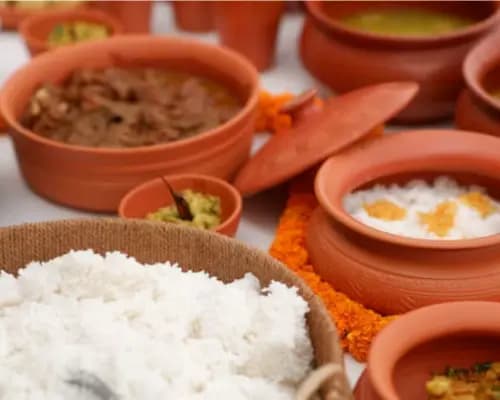
There's an argument that none of this is new. Banana leaf thalis, which compost naturally and produce zero plate waste, predate plastic catering by generations. Kulhads have been standard at roadside stalls and weddings for just as long. Seasonal cooking tied to regional harvests is how Indian home kitchens worked long before bulk catering and disposable plastic became the default at weddings. In a lot of ways, the modern zero waste wedding menu is less an import from somewhere else and more a return to habits that were already there before they got replaced.
The irony of a zero waste wedding is that it rarely feels smaller. If anything, it feels more personal. Guests remember the live jaljeera station. The dessert is made in small batches. The regional dish that tasted like nothing they'd had at a wedding before. Nobody walks away talking about the composting plan or the NGO pickup. And maybe that's exactly why this is catching on so fast. In trying to waste less, couples keep discovering something they didn't plan for — the celebration gets richer once excess stops being the point.
A zero waste wedding menu isn't a smaller wedding wearing an eco-friendly label. It's a more deliberate one — fewer dishes, better sourced, served to people who are actually going to eat them. The waste disappears, but so does the sense that a celebration has to be measured by how much food was left standing at the end of the night. For couples planning a destination wedding in India, this shift is proving to be one of the more practical ways to personalise your wedding without inflating the budget. Whether it's a tightly curated veg food menu and non-veg food menu on the main day, or a simple, well-made wedding breakfast the next morning, the same principle holds: fewer things, done with care, leave a stronger impression than a long list nobody finishes. Working with experienced destination wedding planners in India who understand this approach makes it far easier to get the planning right — and to make your wedding unforgettable for reasons that have nothing to do with how much was on the table. And this is where Destination Wedding Bharat comes in. We help you plan your dream wedding! So what are you waiting for? Check out our website and plan your dream wedding today!
Does a zero waste wedding menu mean serving less food? No. It's about cutting unnecessary waste, not hospitality. Portions and variety — including the balance between the veg food menu and non veg food menu — are planned more precisely, but nothing about the experience is scaled down. Can a zero waste wedding still feel luxurious? Yes. Most luxury weddings now lean on curated experiences, premium ingredients, and thoughtful hospitality rather than sheer menu size — the two aren't in tension at all.