Your wedding wardrobe may change with every function but you know one thing that defines the look. Your Veil. From the laid-back charm of your mehndi to the glam sangeet ceremony, Indian bridal veils are switching up today and doing it in style. That’s why we have rounded up the top Indian veil styles that work beautifully in a single event. So why are you waiting? Let the veil goals begin!
Here are all eight at a glance. Table first. If something catches your eye, scroll to it.
|
Style |
Best Suited For |
Distinctive Features |
|
Classic Red Bridal Veil |
Traditional red or maroon outfits |
Rich colours and matching borders |
|
Net and Sheer Veil |
Lightweight bridal looks |
Sheer fabric and delicate draping |
|
Pearl-Embellished Veil |
Elegant, subtle styling |
Pearl details that complement jewellery |
|
Mirror-Work Veil |
Festive bridal looks |
Reflective embellishments |
|
Embroidered Bridal Veil |
Heritage-inspired outfits |
Zari, threadwork and ornate borders |
|
Dramatic Long Veil |
Grand entrances and photographs |
Extra length and flowing drapes |
|
Double-Dupatta Bridal Style |
Layered bridal looks |
Separate head and body drapes |
|
Customised Bridal Veil |
Personalised bridal styling |
Initials, motifs or meaningful embroidery |
A quick note on the table: Pearls, mirrors and embroidery describe what’s stitched on. A double dupatta describes how you drape it. Mix them freely. A double dupatta edged with pearls is perfectly normal.
Whether you’re still shopping or already have the lehenga, this guide covers eight Indian bridal veil styles, with ideas for matching each one to your outfit and hair. If you’re still shaping the overall look, our guide to choosing your wedding theme is a good place to start.
What is the first thing that comes to your mind when you think of a bridal dupatta? Most of us when have grown up, to dream about a deep red or maroon dupatta with embroidery border of matching lehenga. The reason – red stands for modesty and beginning and not every family can do this colour. So how do you do it? Wear a Maroon or red lehenga and if you are a traditional bride go in for a saree. The border can be either darker or lighter to match the gold in your dress or you can take a daring decision and go for a deep pink. For this look go for kundan and polki jewellery. One tip: watch out for a very thick border or when your dupatta refuses to be pinned!
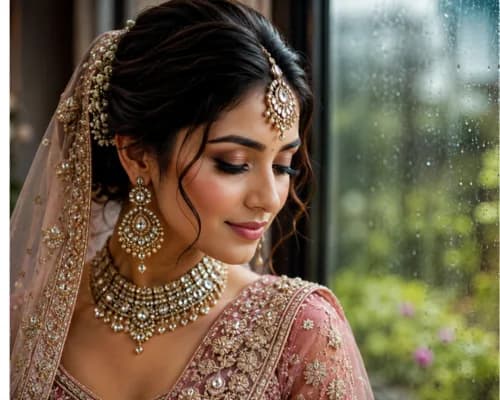
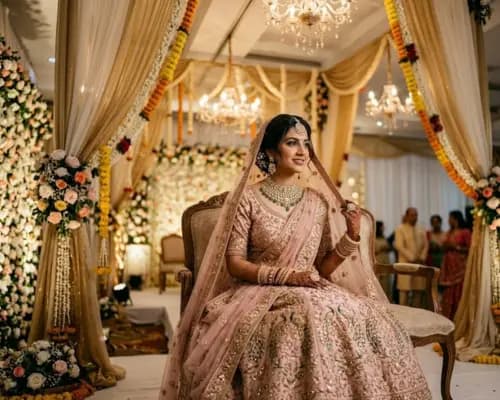
Is your ensemble the showstopper? Then net and sheer veil is a must. Net fabric is semi-transparent with a beautiful scalloped or lace finish on the edges. It is preferred on pastel and ivory-colored lehengas with rich embroidery work. Talk about hair- whatever the style- a classy bun or flowing tresses, both will look equally charming with this mild veil. A quick tip for you-test the transparency of the sheer fabric in flash and sunlight as the hue might vary!
Are you more of a subtle shine kind of person, and shine is a little too sparkly for you? Pearls should be your choice. They can be gracefully strewn across your net or adorn the edge of your veil for a beautiful appearance on ivory, blush or pastel lehengas, or even a plain saree. Want just a little more shine? Duplicate that in your earrings or maang tikka. For other styles check out our Indian bridal jewelry guide. Just a little note, pearls are heavy and may snag on hair accessories; take a peek at the stitching!
Picture your mehndi or sangeet, when small mirrors shimmer and catch every camera flash. Fun! A mirror-work veil works the same way as you walk, so pair it with a showstopper lehenga. Keep your makeup and jewellery minimal to match the strong presence of the mirror work.
Feeling a little traditional? An embroidered bridal veil may be more you. The embroidery pulls attention away from everything else around it, so let a simple lehenga or saree act as the backdrop. Use the same thread colour as your blouse or skirt for a seamless look. Keep in mind that dense, many-layered embroidery is heavy on the neck, so secure it well.
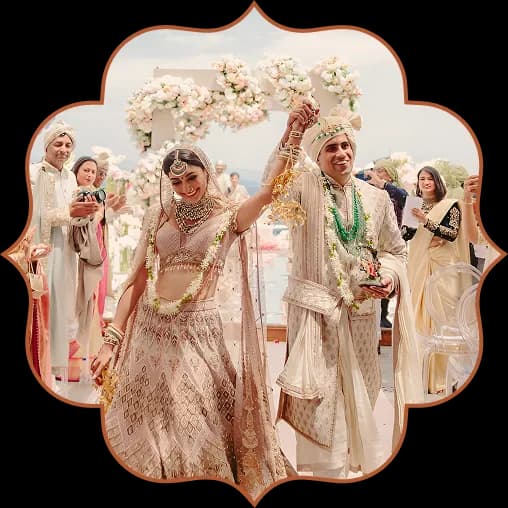
For more wow factor, choose a long bridal veil that flows to the ground behind you. It’s spectacular, especially with a simpler skirt or a long-fall saree. Sweep your hair up to show off the length, and get comfortable walking, turning and sitting in all that fabric. Consider asking someone to help hold the train.
Looking for a draping style that’s a little different? The double-dupatta look is worth a try. Use one dupatta over your head and drape the other over your arm or across your shoulders. Choose a head veil colour that contrasts with the second dupatta. Imagine a red head veil over a pastel one. Wow! Rehearse your look, since a little extra pinning is part of it.
If you want something very personal, go for a customised bridal veil. Of all the Indian bridal veil ideas here, this one carries the most of you. Think initials, a symbol, or a fragment of your grandmother’s vintage saree. What about a family brooch, or a date you adore along the hem? Heirloom pieces are fragile, so start early and ask your tailor about secure ways to attach vintage fabric.
A bridal lehenga with veil works best when only one of them leads. Here’s where to begin:
Lots of detailed embroidery on your outfit? Choose a lighter veil, or one with a discreet border.
Keeping it simple? An embroidered, pearl or statement veil might be just what you’re after.
Wearing red or maroon? A bridal veil red to match, or a deliberately contrasting colour, would do wonders.
Pastel or ivory outfit? A sheer, embroidered or softly embellished veil works beautifully.
Detailed blouse and jewellery? Pick a drape that lets those features shine.
Here is what you should choose:
Comfort: Does it stay in place for the whole time you need to wear it?
Hairstyle: Can you pin it without wrecking your hair? Our Indian wedding hairstyle ideas cover reception looks, but they’ll still help with bridal hairstyles with a veil.
Movement: Can you walk, sit and join the rituals easily?
If you’re browsing for an Indian bridal veil online, save a picture of each one to compare with your outfit.
Caught between a single and a double dupatta? Your outfit and your family’s traditions will decide. Practices vary between families and communities, so there’s no single correct answer. Here’s the brief difference:
|
Feature |
Bridal Veil |
Double Dupatta |
|
Style |
Single drape over the head or face |
Two dupattas styled separately |
|
Best For |
Minimal, elegant or dramatic bridal looks |
Traditional, layered bridal looks |
|
Coverage |
Covers the head and may cover the face |
Covers the head and adds a second drape over the shoulder or body |
|
Fabric |
Net, tulle, organza or embellished fabric |
Silk, chiffon, georgette or net |
|
Styling |
Focuses on the head and overall silhouette |
Adds dimension and balances the bridal outfit |
|
Best Choice |
Brides who prefer a simple or statement veil |
Brides who want a traditional, layered look |
If the ceremony format affects your decision, our Indian wedding ceremony guide can help.
A bridal lehenga with veil can look wonderful in the mirror and odd in a photo. A few checks before the big day help:
Transparency: See how see-through the fabric looks in daylight and indoors.
Visibility: Make sure the border and embellishments show when you’re fully dressed.
Trial Run: Practise wearing the veil with your stylist and photographer before the wedding.
Practice: Rehearse your entrance and any veil-reveal shots you’ve planned.
Destination Wedding: If you can, try the veil outside, because wind does odd things to a long bridal veil. Our guide to finding your destination wedding style has more.
Take time at your final fitting and run through this list.
It coordinates with your lehenga or saree in colour and detail.
It works with your hairstyle and jewellery. Try your bridal hairstyles with veil on together.
You’ve tried it with the complete outfit.
It’s pinned firmly and feels comfortable.
You can move around and join the ceremony.
You’ve tested it for the planned shots and setting.
Dreaming of the perfect bridal veil for your wedding day look? It needs to match your outfit, feel comfortable for hours and, more than anything, reflect you. Whether it’s a red veil, net, pearls, mirrors, embroidery, a long dramatic drape, a double dupatta or a veil with a special family detail, every style has a role. So how do you pick the right one? Put it on with all your accessories, check it in the mirror and in the light you’ll be seen in, and find out if it feels right. Let these eight styles do the thinking. But for that you need to hire the best destination wedding planners in India. And this is where Destination Wedding Bharat comes in. We help you offer a perfect balance between cinematic aesthetics, cultural fusion, and practical comfort. So what are you waiting for? Check out our blog and plan your dream wedding today!
Q1 . Is a double dupatta better than a single bridal veil?
Not necessarily. A double dupatta gives you a bigger footprint, more pleats and a more defining style separates your head from your body. A single dupatta, on the other hand, is airy and less impressionistic. Consider your season, occasion and comfort level before settling.
Q2 . What type of bridal veil should I purchase for an outdoor/destination wedding?
Opt for a style that is pinable on securely. A long or super light weight veil may be hard to control outside. Bear in mind wind, the location, how far you will be walking and the photographs and try on the complete style before the big day where you can.
Not necessarily. A double dupatta gives you a bigger footprint, more pleats and a more defining style separates your head from your body. A single dupatta, on the other hand, is airy and less impressionistic. Consider your season, occasion and comfort level before settling.
Opt for a style that is pinable on securely. A long or super light weight veil may be hard to control outside. Bear in mind wind, the location, how far you will be walking and the photographs and try on the complete style before the big day where you can.